
NSCN/PRN Announces Formation as New Naga Army Organization
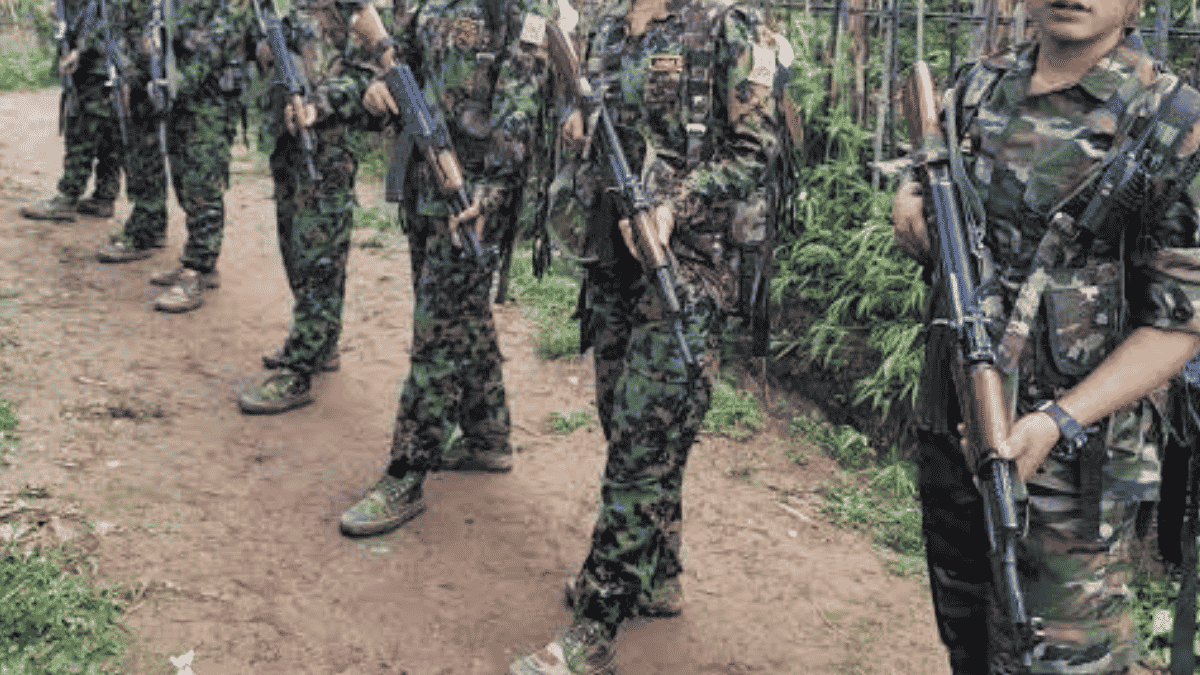
NSCN/PRN has announced its formation as a new Naga Army organization, saying senior Naga Army generals and Kilonser-rankings leaders have come together to pursue Naga unity, protect Naga identity and historical rights, and advance the Naga people’s political aspirations.
In a declaration dated September 10, 2026, the organization said Nagas across tribes, communities and regions had converged under the aegis of the NSCN/PRN to advance what it described as the Naga historical and political movement.
The declaration lists among its objectives the safeguarding of Naga identity and historical rights, promotion of unity and reconciliation, protection of land, culture and traditions, and pursuit of what it describes as a peaceful and honorable political future.
Joseph Naga says formation is not another faction
Speaking to Nagaland News, Joseph Naga, who is identified in the declaration as Secretary to The National Socialist Council of Nagaland/People’s Republic of Nagaland (NSCN/PRN) , said the formation should not be understood as another factional split. Also Read NSCN IM Split Confirmed: Eastern Flank Declares Provisional Government
According to Naga, around 11 or 12 Naga Army generals and leaders holding Kilonser-level positions came together and discussed the formation of the new organization. He said the process subsequently brought together more than 160 Army personnel.
Naga said the organization was formed in Myanmar, where the group currently has its base, and that its leaders are presently in different designated areas.
He said several of the leaders are still traveling to their respective areas and that, because of communication limitations, the organization is not yet in a position to disclose the full details of its leadership structure.
Leadership details to be released later
Naga told Nagaland News that leadership positions have already been selected, including a President, Vice-President and Army leadership, but that the names and complete organizational details cannot yet be disclosed.
He said the organization will also have civilian wings, although it does not currently have an Ato Kilonser.
Naga said he expects to provide further details, including photographs and information on the leadership and organizational structure, once communication with the leaders becomes possible.
“People will decide” on relationship with Government of India
Asked about the organization’s position regarding the Government of India, Naga said the Naga people would decide, stressing that the organization’s work is for the Naga people.
The statement itself does not set out a specific agreement or negotiating position with the Government of India. Instead, it describes the group’s objective as pursuing a peaceful political future based on mutual respect and understanding.
Historical context highlighted in declaration
A substantial portion of the declaration recounts major events in the Naga political movement, beginning with the 1929 memorandum to the Simon Commission and continuing through the 1947 Nine-Point Agreement, the 1951 plebiscite, the 1953 India-Burma boundary, the 1958 AFSPA, the 1975 Shillong Accord and the formation of the NSCN in 1980.
It also refers to the 1997 NSCN-IM ceasefire, the 2015 Framework Agreement, the 2017 Agreed Position involving the NNPGs, and the Government of India’s 2024 decision concerning the Free Movement Regime along the India-Myanmar border.
The document presents these developments as part of a broader historical context for the continuing Naga political question.
Call for unity among Nagas
The organization’s present call centers on overcoming internal divisions and pursuing the Naga political question through dialogue and peaceful cooperation.
The declaration calls on Nagas to rise above internal divisions, prejudice, personal ambitions and what it calls parochial interests. It advocates “unity without uniformity,” cooperation without coercion and dialogue without surrendering collective identity.
It also says the future of the Naga people depends on mutual respect among tribes, communities, political groups, churches, civil society organizations and other sections of society. Also Read GPRN/NSCN (Unification) and NNC/FGN Sign Memorandum of Understanding on Naga Unity
Position regarding Manipur Nagas
Naga was also asked about the representation of Tangkhul and other Naga communities from Manipur.
According to him, their absence from the presently disclosed structure should not be interpreted as an exclusion of Manipur Nagas. He said the organization’s approach and ideology in this regard is somewhat different, while indicating that further details would be provided later.
More information expected
Naga said he would provide additional information to Nagaland News once communication with the organization’s leaders becomes possible, including details of the leadership, organizational structure and photographs.
He also explained that he had travelled more than 20 kilometers on foot to reach the Nagaland side of the border in order to establish communication, and said he expected to make a similar effort to communicate further information to the media.
The September 10 declaration concludes by reaffirming the organization’s stated commitment to unity, peace, justice, dignity, identity, historical rights, collective responsibility and a peaceful and sustainable political future.
The declaration is signed by Joseph Naga, Secretary to NSCN/PRN.
Related Stories
How Many Naga Army Factions Are There in Nagaland? Full List of 30 Organisations
The question “How many Naga Army factions are there in Nagaland?” is one that continues to generate confusion,…

Tuensang Liquor Alert: Nagaland DGP Warns After 9 Deaths Reported
KOHIMA, September 12: Nagaland Director General of Police (DGP) Rupin Sharma has issued an urgent public warning against…
Nagaland Police Continue Search for Robert Kikon, Believed to Be in Southeast Asia
Nagaland Police are continuing efforts to locate Robert Kikon, a wanted accused in a POCSO case, who is…