
How Many Naga Army Factions Are There in Nagaland? Full List of 30 Organisations
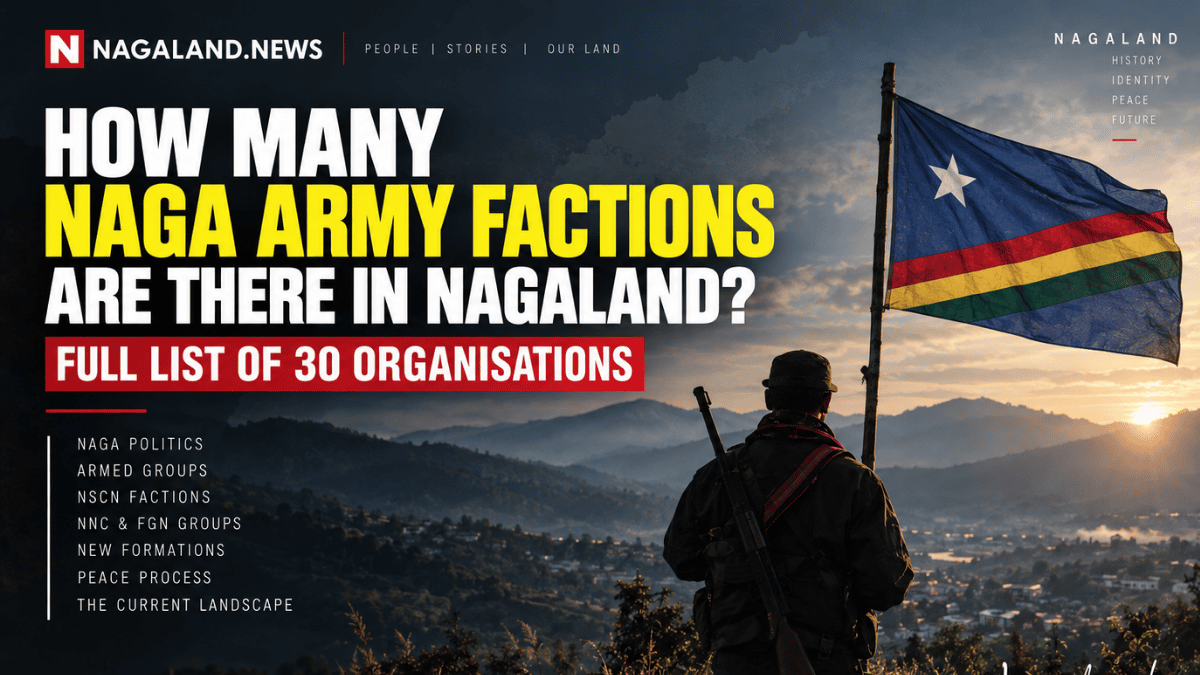
The question “How many Naga Army factions are there in Nagaland?” is one that continues to generate confusion, particularly as new organisations emerge and existing groups operate under different political, military and administrative structures.
A split inside the NSCN(IM) this year has again changed the Naga political landscape. Based on our review of organisational statements, published records and news reports, 30 Naga political and armed organisations can currently be identified as of September 2026. The figure is not an official government count and does not mean there are 30 separate armies.
There is no official government count of Naga Army factions in Nagaland. Government of India documents identify only some Naga organisations in formal ceasefire and peace-process arrangements, while Naga political and armed groups continue to split, merge and reorganise.
For this report, we identify 30 Naga political and armed organisations as of September 2026.
The number needs to be understood carefully. Not all 30 organisations have an armed wing, not all use the name Naga Army, and only some have formal agreements with the Government of India. The term “Naga Army faction” is commonly used when discussing the Naga political movement, but it does not describe every organisation on the list in exactly the same way.
Why is it difficult to give one number?
The history of the NSCN is central to understanding why the number of Naga factions is difficult to establish.
The NSCN was founded on 31 January 1980 by Isak Chishi Swu, Thuingaleng Muivah and S S Khaplang after a section of the Naga movement rejected the 1975 Shillong Accord. In 1988, the organisation split into the NSCN(IM) and NSCN(K).
Further divisions followed. The NSCN(U) emerged in 2007, while Khole Konyak and Kitovi Zhimomi left the NSCN(K) in 2011. The NSCN(R) was announced in April 2015, followed by the emergence of a Khango faction from the NSCN(K) in 2018.
Each subsequent split produced new organisational structures and, in many cases, new names. Some organisations also use a leader’s name to distinguish one faction from another, while rival groups can claim the same organisational name while disputing leadership.
For that reason, this report counts organisations as they exist and identify themselves today, rather than simply counting historical names. Also Read NSCN/PRN Announces Formation as New Naga Army Organization
How does the Government of India classify Naga groups?
The Government of India deals with Naga organisations through different political and ceasefire arrangements. These should not be confused with the overall number of Naga political or armed organisations.
The Framework Agreement
The NSCN(IM) has been under a ceasefire arrangement with the Government of India since 1997 and signed the Framework Agreement on 3 August 2015.
The Naga peace talks have continued, but a final settlement has not been reached. Issues including the demand for a separate Naga flag and constitution have remained among the subjects discussed during the negotiations.
Ministry of Home Affairs ceasefire agreements
The Ministry of Home Affairs identifies separate ceasefire arrangements with several Naga organisations.
An April 2026 MHA document lists ceasefire arrangements involving NSCN(R), NSCN(NK) and NSCN(K)-Khango, with the agreements extended to April 2027. The NSCN(K)-Niki group entered into its ceasefire arrangement separately on 8 September 2021, with the agreement subsequently extended.
These arrangements represent only part of the broader Naga political landscape.
The Agreed Position
The Working Committee of the Naga National Political Groups (WC-NNPGs) signed the Agreed Position with the Government of India on 17 November 2017.
The NNPGs were formed in December 2016. The Khango group later joined the platform as its seventh member in January 2020.
The platform subsequently developed different camps, including groups associated with N Kitovi Zhimomi and Neokpao Konyak.
The Agreed Position is a political negotiating framework, and should not automatically be described as a ceasefire agreement. Also Read GPRN/NSCN (Unification) and NNC/FGN Sign Memorandum of Understanding on Naga Unity
The NSCN family
The NSCN(IM) remains the only NSCN organisation with a Framework Agreement with the Government of India.
Several other NSCN formations exist separately.
Within the NSCN(K), Yung Aung challenged the leadership following the death of SS Khaplang in 2017. In June 2023, another faction announced the election of Maj Gen (Retd) Ang Mai as chairman and said Yung Aung had been removed from the chairmanship earlier that year.
The two formations have subsequently issued competing claims concerning leadership.
The NSCN(U) has also experienced an internal leadership dispute. A camp associated with Neokpao Konyak and Alezo Venuh impeached Kitovi Zhimomi in April 2024. Kitovi Zhimomi subsequently returned to the group’s Khehoi headquarters in March 2025, according to reports.
Both organisational camps are therefore treated separately in this list.
The NSCN(R) has similarly experienced a division involving Akato Chophy. Akato’s group subsequently joined other organisations in the WC-NNPGs in June 2025.
These developments demonstrate why a simple count of historical NSCN names can be misleading.
The NNC and FGN groups
The Naga National Council (NNC) declared independence on 14 August 1947.
Historically, the Naga national movement developed political and military structures including the Naga Federal Government, later known as the Federal Government of Nagaland (FGN), and the Naga Army.
Today, the NNC name is associated with several separate organisational structures, including FGN, Parent Body, GDRN, NPGN and UNPG formations.
Some of these organisations have also been associated with the broader WC-NNPG political process.
It is therefore important to distinguish the historical Naga Army structure from the modern organisations that use NNC, FGN or related names.
The 2026 NSCN(IM) split
One of the major developments affecting the Naga political landscape in 2026 has occurred within the NSCN(IM).
The NSCN(IM) leadership expelled several senior figures, including two lieutenant generals, amid allegations concerning disloyalty and parallel command structures.
On 21 July 2026, a group identifying itself as the NSCN/GPRN Eastern Flank met at Mt Horeb Camp in Myanmar, rejected the expulsions and announced a provisional government.
The group’s chairman is Ikato I Chishi Swu, son of NSCN co-founder Isak Chishi Swu.
The Eastern Flank said that it would continue political and armed resistance and argued that the existing ceasefire framework no longer reflected its position. It also accused the Camp Hebron leadership of compromising the 2015 Framework Agreement through negotiations concerning competencies within the Indian constitutional framework.
The NSCN(IM) leadership and regional structures have subsequently reaffirmed their loyalty to the collective leadership under Q Tuccu and Thuingaleng Muivah. Also Read NSCN IM Split Confirmed: Eastern Flank Declares Provisional Government
The development has therefore created another distinct organisational formation that must be considered when examining the current Naga political landscape.
Three additional organisations
The current landscape also includes three organisations that have declared themselves separately.
The NSCN/FRGN identifies the Naga Defence Force (NDF) as its military wing.
The NSCN/PRN describes itself as a new Naga Army organisation. Its secretary, Joseph Naga, said the organisation brought together Naga Army generals and other personnel and stressed that it should not simply be understood as another factional split.
GNNC-DSRN is also included among the currently identifiable Naga political formations.
These organisations are not included in older organisational lists and therefore need to be considered separately when assessing the present-day landscape.
Full list: 30 Naga political and armed organisations
The following table presents the 30 organisations identified for this report. The armed-wing column reflects how the organisation is described or structured. “Not in the MHA ceasefire list” means only that the organisation is not among the groups identified by the Ministry of Home Affairs in its formal ceasefire arrangements; it does not by itself determine the organisation’s broader political standing.
| No. | Organisation | Armed wing or structure | Government of India status |
|---|---|---|---|
| 1 | NSCN/GPRN (IM) | Naga Army | Ceasefire since 1997; Framework Agreement signed 3 August 2015 |
| 2 | NSCN/GPRN (K), Yung Aung | Naga Army | Not in the MHA ceasefire list |
| 3 | NSCN/GPRN (K), Angmai | Naga Army | Not in the MHA ceasefire list |
| 4 | NSCN/GPRN (U), N Kitovi Zhimomi | Naga Army | MHA ceasefire with NSCN(NK); leadership disputed between two camps |
| 5 | NSCN/GPRN (U), Alezo Venuh | Naga Army | Same organisational grouping as above |
| 6 | NSCN/GPRN (R), Y Wangtin Konyak | Naga Army | MHA ceasefire, extended to April 2027 |
| 7 | NSCN/GPRN (R), Akato Chophy | Naga Army | Declared a unilateral ceasefire; aligned with WC-NNPGs since June 2025 |
| 8 | NSCN/GPRN (Khango) | Naga Army | MHA ceasefire, extended to April 2027 |
| 9 | NSCN/GPRN (Niki Sumi) | Naga Army | MHA ceasefire, extended to September 2027 |
| 10 | NSCN/GPRN (Yangba) | Naga Army and political structure | Not in the MHA ceasefire list |
| 11 | NNC/FGN | Naga Army and FGN structure | Not in the MHA ceasefire list |
| 12 | NNC/FGN (Transit Peace Camp) | Naga Army and FGN structure | Not in the MHA ceasefire list |
| 13 | NNC/FGN (NNPG) | Naga Army and FGN structure | Not in the MHA ceasefire list |
| 14 | NNC/FGN, Thüpüshuyi group | Naga Army and FGN structure | Not in the MHA ceasefire list |
| 15 | NNC (Parent Body), Yilow Tsopoe | Political structure | Not in the MHA ceasefire list |
| 16 | NNC, Yilow Humtsoe | Political structure | Not in the MHA ceasefire list |
| 17 | NNC, Nagi Angami | Political structure | Not in the MHA ceasefire list |
| 18 | NNC, T Ovung | Political structure | Not in the MHA ceasefire list |
| 19 | NNC/FGN (NA Initial) | Naga Army and FGN structure | Not in the MHA ceasefire list |
| 20 | NNC/UNPG (Parent Body) | Naga Army and FGN structure | Not in the MHA ceasefire list |
| 21 | NNC/GDRN (NA) | Naga Army and FGN structure | Not in the MHA ceasefire list |
| 22 | NNC/GDRN | Naga Army and FGN structure | Not in the MHA ceasefire list |
| 23 | NNC (Parent Body), Royam Yim | Political structure | Not in the MHA ceasefire list |
| 24 | NNC/NGPR, Saoba Yim | Political structure | Not in the MHA ceasefire list |
| 25 | NNC/NGPR, Mathung Lotha | Political structure | Not in the MHA ceasefire list |
| 26 | UNPG, Kivilho Zhimomi | Political and military structure | Not in the MHA ceasefire list |
| 27 | GNNC-DSRN | Organisation-specific structure | Not in the MHA ceasefire list |
| 28 | NSCN/GPRN Eastern Flank | Naga Army | Separate 2026 political/armed declaration |
| 29 | NSCN/FRGN | Naga Defence Force (NDF) | Newly declared; not in the MHA ceasefire list |
| 30 | NSCN/PRN | Naga Army | Newly declared; not in the MHA ceasefire list |
How we counted the 30 organisations
For this report, each organisation presenting itself under distinct leadership and organisational identity is counted as one entry.
Where two camps claim the same broader organisational name, they are listed separately where there is sufficient evidence that they currently operate as distinct formations. This applies particularly to the disputes surrounding the NSCN(U) and NSCN(R).
The count is based on organisations as they are identified in the current landscape, rather than simply reproducing historical organisational names.
The list can change as organisations merge, divide, reorganise or adopt new names.
So, how many Naga Army factions are there?
Based on the organisations identified for this report, 30 Naga political and armed organisations or factions can currently be identified in the Naga political landscape as of September 2026.
However, 30 is not an official Government of India figure.
It also does not mean that Nagaland has 30 separate armies.
The organisations differ considerably in their political structures, military structures and relationships with the Government of India.
The formal government categories are much narrower: the Framework Agreement with NSCN(IM), separate Ministry of Home Affairs ceasefire arrangements involving other Naga groups, and the Agreed Position with the WC-NNPGs.
Therefore, when people ask “How many Naga Army factions are there in Nagaland?”, the answer depends partly on what they mean by “faction.” If the question is about the broader collection of currently identifiable Naga political and armed organisations, our September 2026 count is 30.
Related Stories
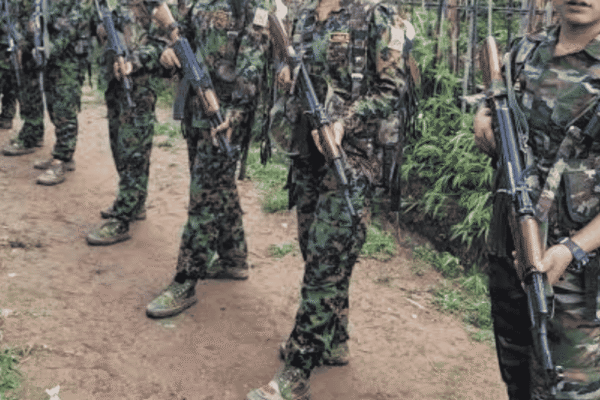
NSCN/PRN Announces Formation as New Naga Army Organization
NSCN/PRN has announced its formation as a new Naga Army organization, saying senior Naga Army generals and Kilonser-rankings…
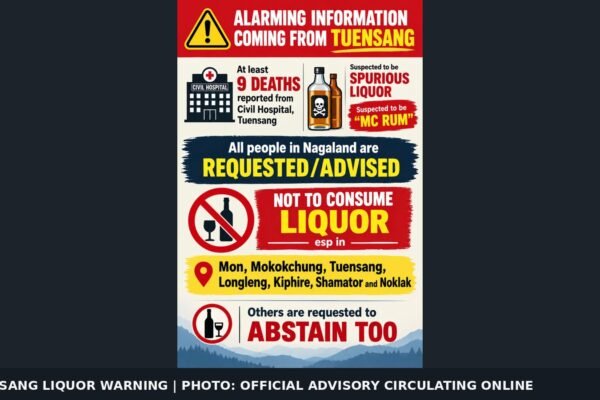
Tuensang Liquor Alert: Nagaland DGP Warns After 9 Deaths Reported
KOHIMA, September 12: Nagaland Director General of Police (DGP) Rupin Sharma has issued an urgent public warning against…
Nagaland Police Continue Search for Robert Kikon, Believed to Be in Southeast Asia
Nagaland Police are continuing efforts to locate Robert Kikon, a wanted accused in a POCSO case, who is…