
FRGN says 30-day deadline meant for drugs, not shops
The NSCN faction calls the CNCCI a 'respected partner' and says its order on businesses aims to create space for Naga youth.
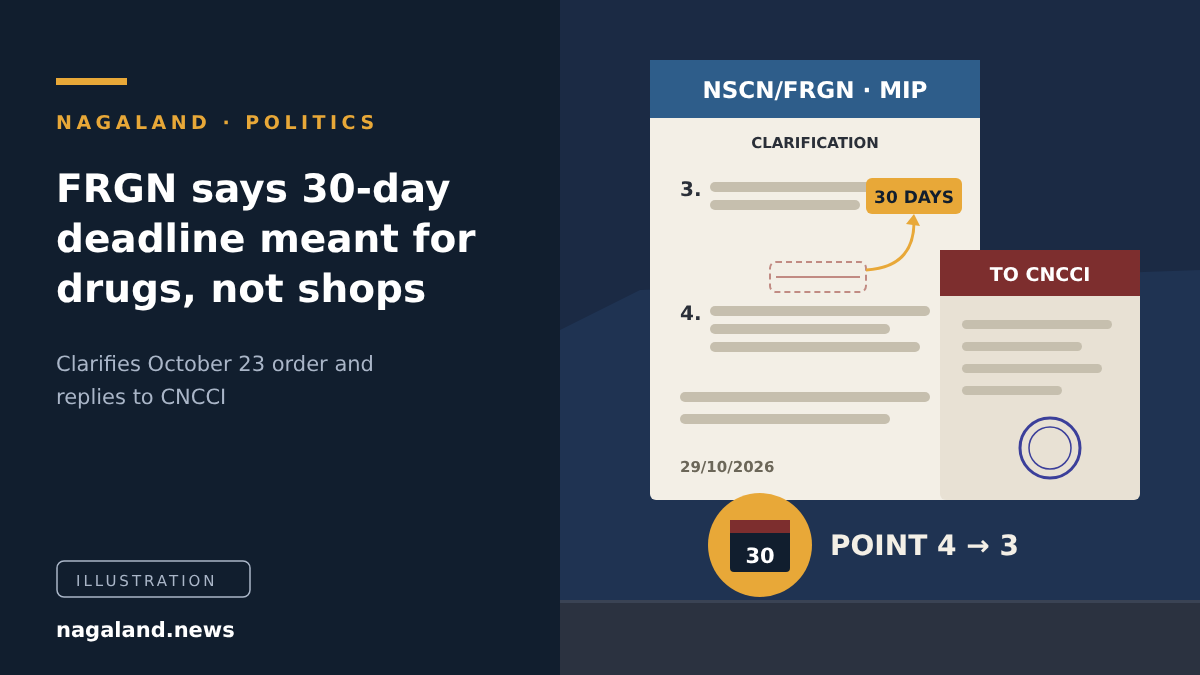
The NSCN/FRGN has said the 30-day deadline in its October 23 order was meant for drug-related activities and prostitution, not for businesses, and that the order’s point on trade is aimed at what it calls “undocumented immigrants (Illegal Bangladeshi)”.
In two press releases dated October 29 and issued by its Ministry of Information and Publicity (MIP), the Federal Republic Government of Nagaland (FRGN) also replied to the Confederation of Nagaland Chamber of Commerce and Industry (CNCCI), calling the trade body “a respected partner” in the State’s economic development.
The FRGN, the government arm of an NSCN faction, issued a four-point order on October 23. It told all businesses in Naga-inhabited areas to close on Sundays, backed the total ban on alcohol, promised “zero tolerance” against drug peddlers and prostitution, and directed “all non-local individuals and businesses” using the “name, identity or representation of Naga people” for business to stop within 30 days. Read our earlier report on the NSCN/FRGN directive on Sunday closure and non-local shops.
Deadline ‘inadvertently placed’
In a release titled “Clarification on the order issued on date 23/10/2026“, the group said the reference to the 30-day deadline “was inadvertently placed under Point No.4” of the earlier order and “was intended to appear under point No.3”.
As first issued, point 3 promised “zero tolerance” against drug peddlers and “unlawful activities” but set no deadline. The clarification now says that “drug related activities and prostitution in all Naga inhabited areas must be eradicated within the stipulated period of 30 days from the date of issuance of this order”. The clarification does not say whether the 30 days run from October 23 or October 29, or what the group would do once the period ends.
Point 4 now framed around ‘undocumented immigrants’
The FRGN said point 4’s “primary objective is to promote the growth, development, and advancement of Naga youth by ensuring better opportunities for their future”. It said the order “addresses concerns regarding undocumented immigrants (Illegal Bangladeshi) residing in towns and Naga villages, engaging in business and farming activities”.
That is a shift from the October 23 text. Point 4 was then headed “Unauthorized use of Naga identity for business purposes in Nagaland” and was addressed to “all non-local individuals and businesses” using the name, identity or representation of Naga people. It did not mention immigrants, Bangladesh or farming. The clarification does not say how the group would decide whether a person is an undocumented immigrant, and it gave no figures or evidence for its claims.
The group said the issue “goes beyond business competition” and touches on economic stability, jobs, cultural identity, social harmony, public services and indigenous rights, as well as “population changes” and the preservation of Naga customs. It called for solutions that “uphold the rule of law, promote fairness” and protect the identity and well-being of Naga society.
Neither release mentions the Sunday closure or the alcohol ban, and neither withdraws any part of the October 23 order.
Reply to the CNCCI
In its second release, the FRGN said it valued the CNCCI’s contribution and would “continue to hold them in high esteem“. It said the “sole objective” of its initiative was to promote local entrepreneurship, self-employment and self-reliance among Naga youth, adding that educated unemployed youths “are forced to migrate” for lack of opportunities.
The group claimed that revenue earned by businesses run by “undocumented immigrants (Illegal Bangladeshi)” in towns and village council areas “is never reinvested back”, and said such businesses “should be checked“. It did not support the claim with data.
It said it hoped the chamber would take its view “in its right spirit” and keep building an economy that promotes “local self-reliance and commercial harmony“, and closed with an appeal for good sense to prevail.
The CNCCI had called the October 23 order an “unauthorised diktat”, asked the State government to say who governs Nagaland, and warned that forcing businesses to close on ethnic grounds could hurt investor confidence. Read: CNCCI asks Nagaland government to act on FRGN directive.
‘Brother-in-arms’
The clarification said it was also responding to statements by the CNCCI “and our brother-in-arms”, without naming them.
On October 27, the Neokpao-led Working Committee of the Naga National Political Groups (WC, NNPG) told the FRGN to withdraw the order, apologise and disband within two weeks. Read: NNPG faction tells FRGN to disband, apologise for directive. The NSCN-K (Khango-Vusshe) separately urged that any regulation of commerce be lawful and non-discriminatory. Read: NSCN-K urges lawful regulation of commerce.
The FRGN releases do not respond directly to the NNPG’s demand that it disband.
What happens next
The October 23 order was not issued under any State or central law. Under Indian law, identifying and deporting foreign nationals who are in the country illegally is a matter for government authorities. Nagaland also requires outsiders to hold an Inner Line Permit, a rule extended to Dimapur in December 2019.
As of October 29, Nagaland.News had not seen a response to the clarification from the CNCCI, the WC, NNPG or the Nagaland government. The NNPG’s two-week deadline falls around November 10.
This report is based on copies of two NSCN/FRGN Ministry of Information and Publicity press releases dated October 29, 2026, and the group’s original press release dated October 23, 2026.

Aloto Naga
Aloto Naga is an Indian journalist and digital media entrepreneur based in Dimapur, Nagaland. He is the founder, editor and publisher of Nagaland.News (formerly Nagaland News Today), a digital publication covering breaking news, politics, education and community developments across Nagaland and Northeast India.
More about Aloto Naga →Related Stories
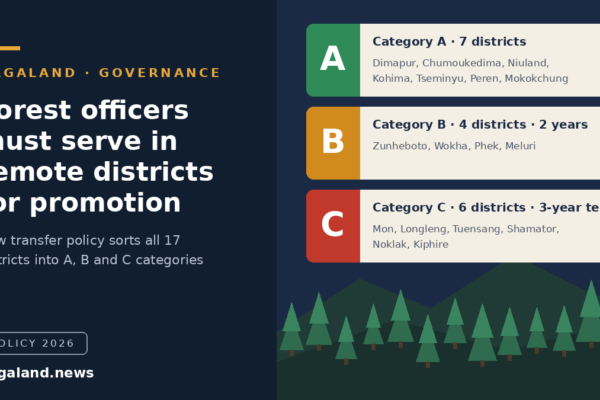
Nagaland forest officers must serve in remote districts to win promotion
Officers from Deputy Ranger Officer to DCF must now serve a full term in remote Category C districts…
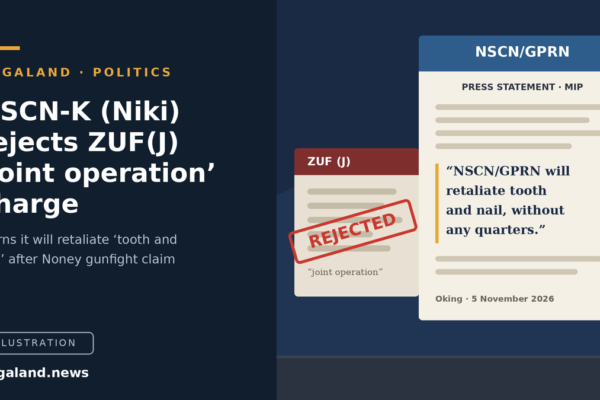
NSCN-K (Niki) rejects ZUF(J) ‘joint operation’ charge
The NSCN/GPRN- Niki warns it will retaliate "tooth and nail" if the claim, made after Wednesday's deadly Noney…
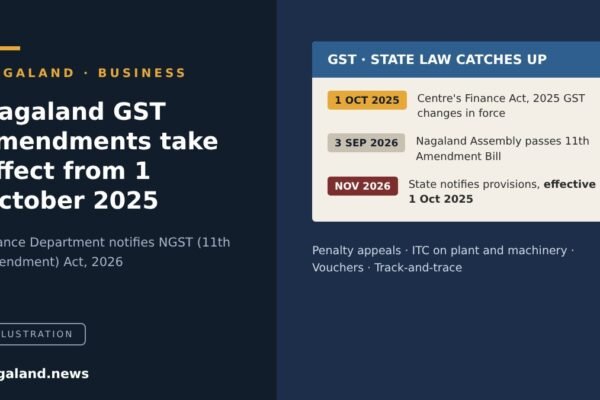
Nagaland brings GST amendments into force from October 1, 2025
The Finance Department has notified most provisions of the Nagaland GST (11th Amendment) Act, 2026 with back-dated effect,…
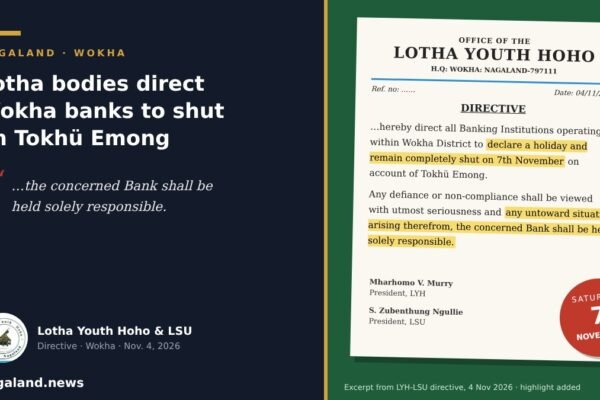
Lotha bodies direct Wokha banks to shut on Tokhü Emong
The Lotha Youth Hoho and Lotha Students' Union say banks that stay open on Nov. 7 will be…
Comments
No comments yet. Be the first to share your view.