
Nagaland brings GST amendments into force from October 1, 2025
The Finance Department has notified most provisions of the Nagaland GST (11th Amendment) Act, 2026 with back-dated effect, aligning state law with Central GST changes in force since October 2025.
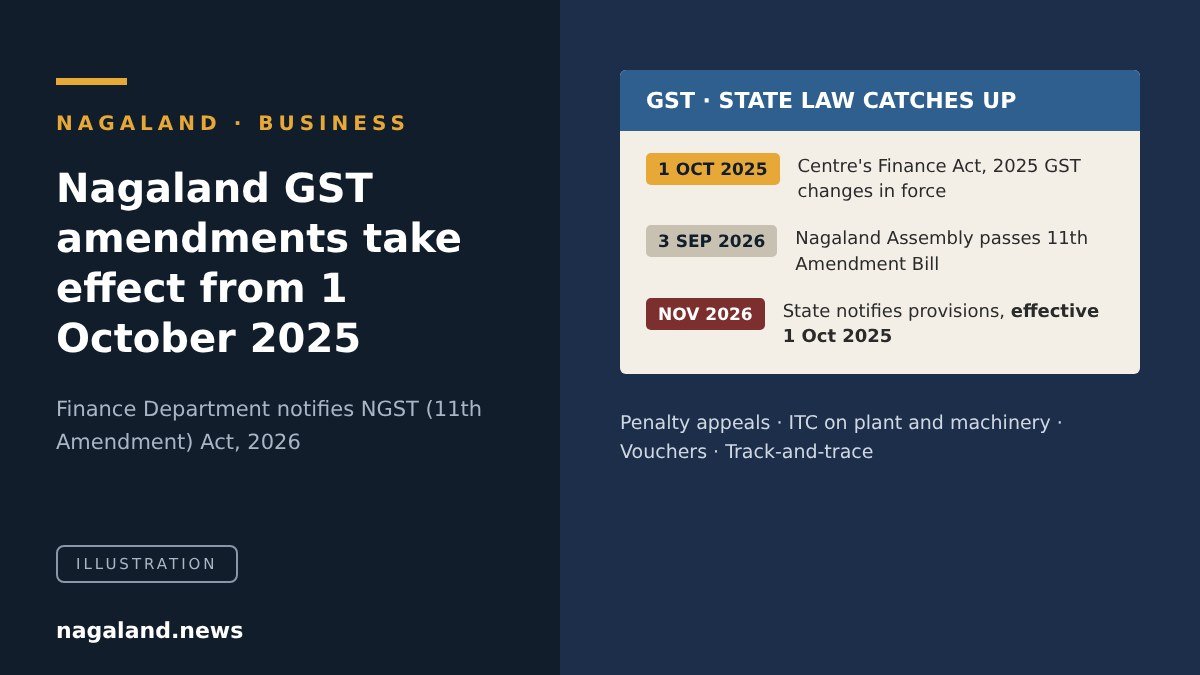
KOHIMA – The Nagaland government has brought most provisions of the Nagaland Goods and Services Tax (11th Amendment) Act, 2026 into force with effect from October 1, 2025, more than a year before the date of the notice, aligning the state’s GST law with changes the Centre made last year.
The Finance Department (Revenue Branch) said in a notification issued from Kohima that the State Government, using its powers under sub-section (3) of Section 1 of the Act, had appointed October 1, 2025 as the date on which clauses (ii) and (iii) of Section 2, Sections 3 to 5 and Sections 7 to 15 of the Act come into force, according to a release from the Department of Information and Public Relations (IPR) on Thursday.
The release did not give the notification number or the date it was signed.
Why the date is in 2025
GST is levied jointly by the Centre and the states, and each state amends its own GST Act to mirror changes Parliament makes to the Central GST (CGST) Act. The Centre amended the CGST Act through the Finance Act, 2025, and brought most of those changes into force on October 1, 2025 through CBIC Notification No. 16/2025–Central Tax, dated September 17, 2025.
Nagaland’s 11th Amendment carries the same changes into the state law. The Chief Minister, Dr Neiphiu Rio, who holds the finance portfolio, moved the Bill in the Nagaland Legislative Assembly, which passed it unanimously during its ninth session on September 3, 2026, according to IPR and The Morung Express. The latest notification fixes the start date so the state tax rules match the central ones from the same day. Also Read Aadhaar App credentials now valid ID proof in Nagaland
The provisions left out of the notification are clause (i) of Section 2 and Section 6. Their central counterparts already carry their own start date of April 1, 2025 in the law itself.
What changes for taxpayers
The central provisions that Nagaland has now mirrored cover the following areas, according to the Finance Act, 2025 amendments as notified by the CBIC:
- Appeals against penalty-only orders: A taxpayer appealing an order that imposes only a penalty, with no tax demand, must deposit 10 per cent of the penalty to file the first appeal, and a further 10 per cent to appeal to the GST Appellate Tribunal.
- Input tax credit on buildings: The bar on input tax credit for “plant or machinery” now reads “plant and machinery”, with effect back to July 1, 2017, overriding any court ruling to the contrary. This narrows the scope for businesses to claim credit on construction of immovable property.
- Vouchers: The special time-of-supply rules for vouchers under Sections 12(4) and 13(4) have been removed.
- Track-and-trace: The government can require unique identification markings, such as digital stamps, on notified goods. Failure to comply attracts a penalty of Rs 1 lakh or 10 per cent of the tax payable on the goods, whichever is higher.
- Credit notes: A supplier can reduce its output tax through a credit note only if the registered buyer has reversed the matching input tax credit.
- Special economic zones: Supplies of goods warehoused in a special economic zone or free trade warehousing zone, before clearance for export or to the domestic market, are treated as neither a supply of goods nor services, with effect from July 1, 2017. No refund is allowed of tax already paid on such supplies.
- Definitions: The terms “local fund” and “municipal fund” are now defined by reference to panchayat and municipal bodies that can levy and keep taxes or fees.
Because GST on a single transaction is split between central and state tax, the state amendment means the same rules now apply to the State GST (SGST) part of a tax bill in Nagaland as to the central part.
The IPR release did not say whether the department will issue guidance to taxpayers in the state on the back-dated provisions.
(With inputs from IPR Nagaland)

Aloto Naga
Aloto Naga is an Indian journalist and digital media entrepreneur based in Dimapur, Nagaland. He is the founder, editor and publisher of Nagaland.News (formerly Nagaland News Today), a digital publication covering breaking news, politics, education and community developments across Nagaland and Northeast India.
More about Aloto Naga →Related Stories
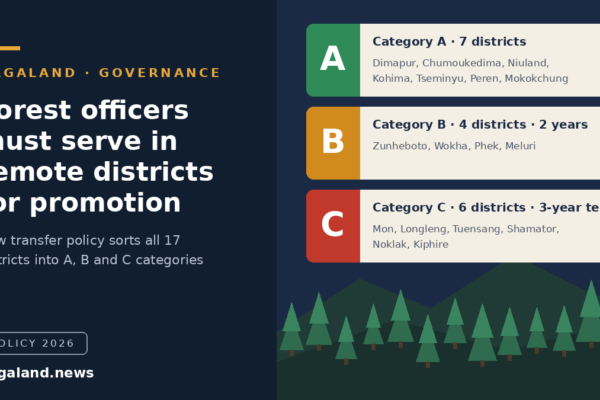
Nagaland forest officers must serve in remote districts to win promotion
Officers from Deputy Ranger Officer to DCF must now serve a full term in remote Category C districts…
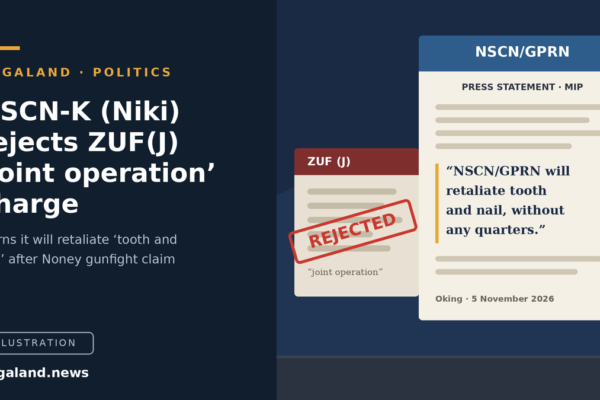
NSCN-K (Niki) rejects ZUF(J) ‘joint operation’ charge
The NSCN/GPRN- Niki warns it will retaliate "tooth and nail" if the claim, made after Wednesday's deadly Noney…
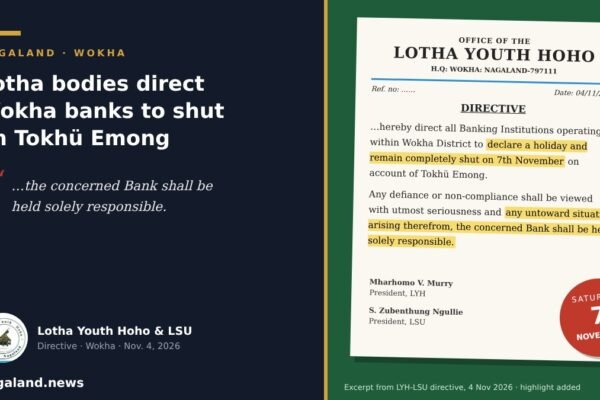
Lotha bodies direct Wokha banks to shut on Tokhü Emong
The Lotha Youth Hoho and Lotha Students' Union say banks that stay open on Nov. 7 will be…

Mokokchung groups ease CMO office shutdown for 3 days
Five civil society bodies pause the closure of the CMO office from Nov. 5 to 7 for child…
Comments
No comments yet. Be the first to share your view.